
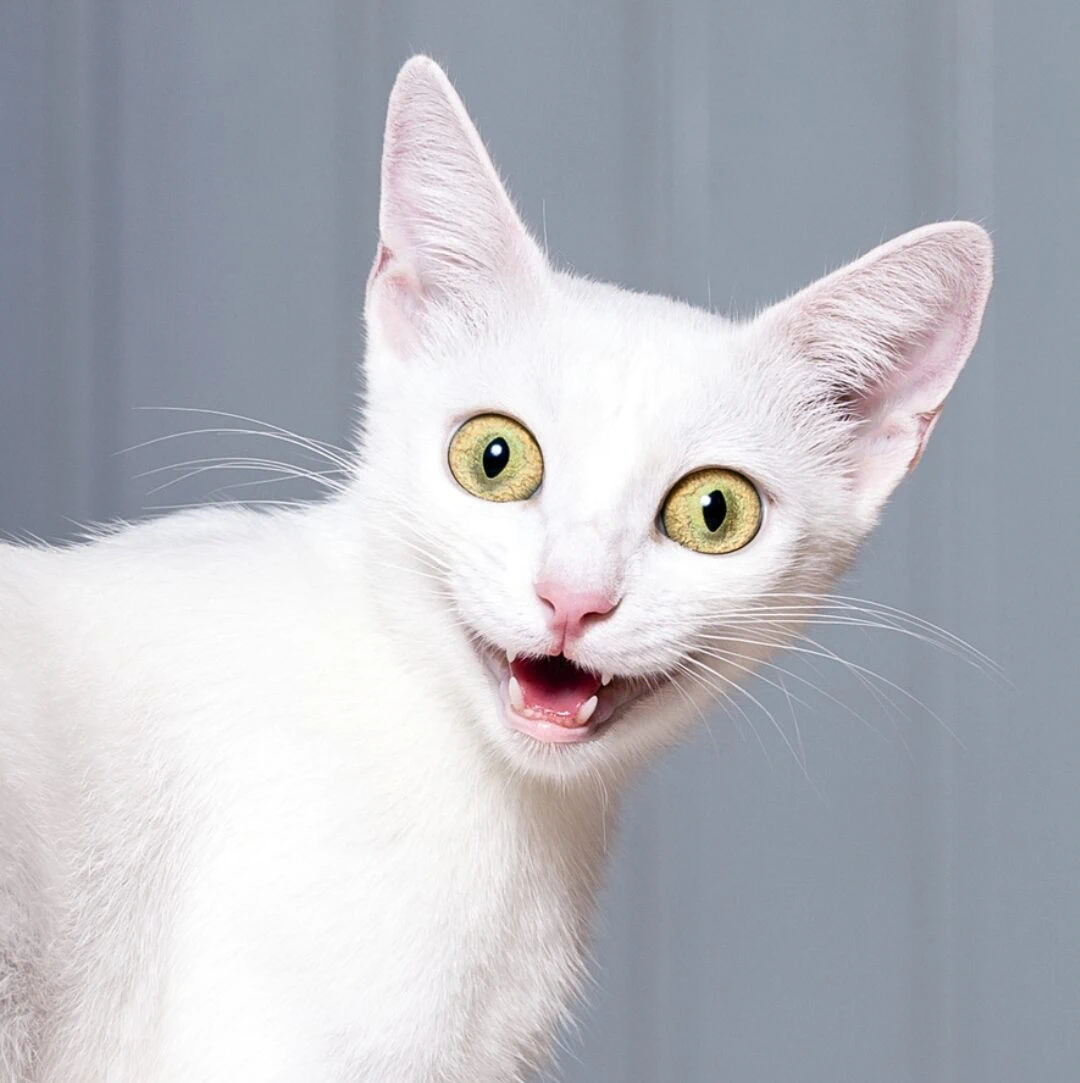
Why does the Selkirk Rex look like a cat that walked through a perm cloud?
Rate this question:
3.5 / 5 (2 ratings)
4 answers
Kenneth Bishop
●
2
●
9
3 mo. ago
That’s a pretty accurate description. The Selkirk Rex’s curly coat comes from a natural genetic mutation, not a perm. Unlike the Cornish Rex or Devon Rex, which have fine, wavy hair from a different gene, the Selkirk’s curl is caused by a dominant gene that affects all three layers of the coat-guard hairs, awn hairs, and down hairs. That’s why they look plush and fluffy, like they’ve been given a permanent wave. The curls are looser and more random, too, so the overall impression is a cat that’s been through a cloud of setting lotion.
6

Pepper
●
2
●
8
3 mo. ago
The visual effect comes from a dominant gene mutation that affects the hair shaft's structure, making it flat and ribbon-like rather than round. This causes each individual hair to bend and curl at irregular angles, creating that dense, tousled appearance. The curl is most pronounced in kittens, and some adults may have a looser wave depending on their specific genetic makeup and coat length.

Felix Harding
●
2
●
8
3 mo. ago
Let me clarify what you're really asking: you want to know the specific biological mechanism behind that woolly, crimped appearance, not just a vague comparison. The key difference from other curly breeds is that the Selkirk Rex's mutation affects the **hair shaft's keratin structure** in all three coat layers-guard, awn, and down hairs. This isn't a superficial wave like the Devon Rex's fine, single-coat curl; the Selkirk's hairs are actually flattened and bent at irregular angles along their entire length, creating that dense, plush "perm" effect you're describing.
What most people miss is that the curl is most dramatic in kittens because their coat is shorter and the crimping is tighter. As they mature, the coat lengthens and the waves relax into larger, looser curls, especially in longhaired varieties. The result is a cat that looks like it stuck its paw in a socket, but it's all natural genetics-no hairdresser required.
What most people miss is that the curl is most dramatic in kittens because their coat is shorter and the crimping is tighter. As they mature, the coat lengthens and the waves relax into larger, looser curls, especially in longhaired varieties. The result is a cat that looks like it stuck its paw in a socket, but it's all natural genetics-no hairdresser required.

Joanne Blake
●
1
●
11
3 mo. ago
Oh honey, I absolutely adore that description because it’s so spot-on. The secret is in the *structure* of the hair itself-each strand is flat, like a tiny ribbon, instead of round. That flatness makes them bend and kink in every direction, creating that wild, crimped, almost chaotic fluffiness that reminds you of a bad 80s perm. It’s not just a wave; it’s a whole texture that feels like velvet and looks like a cloud exploded on their back. My own little curly girl, Muffin, has that exact look-her coat is so dense and plush that when she squirms, she looks like a living, breathing puffball. Honestly, it’s nature’s most adorable accident.
Similar Questions
- Is a Tonkinese happier in a busy family than in a silent apartment?
- Can a British Shorthair be affectionate without turning into a clingy shadow cat?
- Which brush gets through a Maine Coon undercoat without turning grooming time into murder mittens time?
- Is a Burmese voice closer to a soft chatty murmur or a Siamese-level announcement?
- Why do British Shorthairs seem to prefer sitting beside people instead of becoming purritos in laps?