

Listen to UVB-76, the doomsday Russian buzzer.

Have you ever heard of a radio station that broadcasts nothing but a monotonous, repeating buzz, day after day, year after year? This isn't science fiction; it's a very real and enigmatic fixture of the shortwave radio band known as UVB-76, or "The Buzzer." For decades, it has captivated listeners, spies, and conspiracy theorists alike. But how do you actually listen to it? Is it even still on the air? This guide is your direct line to one of the last great mysteries of the airwaves. We will walk you through everything you need to know to hear UVB-76 for yourself, from the simple way to listen online to the more involved method of using a real shortwave radio. The buzz is waiting.
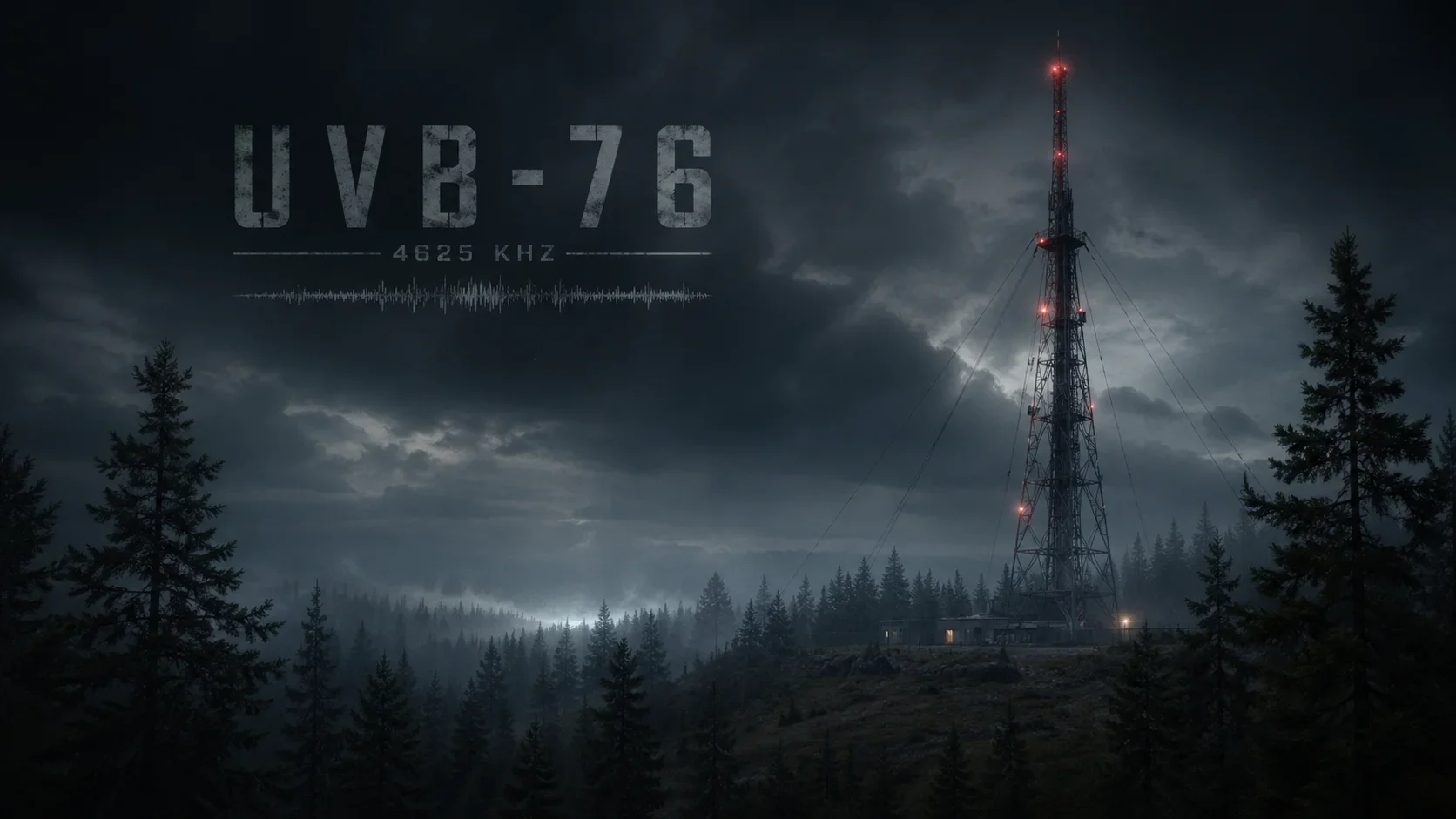
What exactly is UVB-76 and why is it so fascinating?
Before we get to the "how," let's quickly cover the "what." UVB-76 is the unofficial call sign for a mysterious shortwave radio station that has been broadcasting since at least the late 1970s. For the vast majority of its existence, its output has been a low, repetitive buzzing tone, repeating approximately 25 times per minute. This eerie, constant hum is occasionally broken by cryptic voice messages in Russian, which consist of a series of names, numbers, and code words.
The station's origins are believed to be military, tied to the Russian Armed Forces, though this has never been officially confirmed. The purpose of The Buzzer is the subject of intense speculation. The prevailing theory is that it is a "numbers station" used to send coded orders to operatives in the field. The constant buzz, according to this theory, serves as a "channel marker" or "dead man's switch," indicating that the station is operational. If the buzz were to stop, it could signal that something is wrong or that a message of high importance is imminent.
What makes it so captivating is its sheer longevity and mystery. In an age of instant global communication, this low-tech, anonymous broadcast from a forgotten corner of the radio spectrum feels like a relic from the Cold War that refuses to fade away. Listening to it is like eavesdropping on a secret that you're not meant to understand, a feeling that is both thrilling and unsettling.
The station has changed slightly over the years. It moved its transmitter location in 2010, and the nature of its buzz has evolved. But at its core, UVB-76 remains a constant, puzzling presence on the airwaves, inviting anyone who discovers it to ask questions for which there are no easy answers.
The one frequency you need to know
If you want to tune into UVB-76, you need to know where to look on the radio dial. The station is famous for its unwavering dedication to a specific frequency in the shortwave band.
The primary frequency for UVB-76 is 4625 kHz (kilohertz). This is the channel it has been associated with for most of its history. Shortwave radio frequencies are measured in kHz, and 4625 kHz sits within the 49-meter band, which is a portion of the spectrum known for reliable long-distance radio communication, especially at night.
It is crucial to understand that shortwave propagation is affected by atmospheric conditions, time of day, and solar activity. This means the strength and clarity of the signal you receive will vary. Typically, the best time to listen is during the evening, night, and early morning hours in your local time zone, when signals can travel much farther by bouncing off the ionosphere.
While 4625 kHz is the station's home, it's worth noting that UVB-76 has very rarely used other frequencies, but these are exceptions. For 99.9% of your listening attempts, you should focus on 4625 kHz. This consistency is part of what makes it relatively easy to find compared to other, more elusive numbers stations.

The easiest way to listen to The Buzzer right now
You don't need to be a radio expert with a giant antenna in your backyard to listen to UVB-76. The simplest method, and the one we recommend for beginners, is to use an online shortwave radio receiver. These are websites that stream the audio from real, physical shortwave radios located around the world.
This method is fantastic because it bypasses all the technical challenges of radio reception. The radio hardware is maintained by volunteers, often in locations with excellent reception. All you need is an internet connection. You simply visit the website, tune the virtual dial to 4625 kHz, and listen. It's as easy as streaming music.
One of the most popular and reliable services for this is WebSDR. There are multiple WebSDR servers globally. A good choice for listening to UVB-76 is the University of Twente's WebSDR in the Netherlands, as it often has a strong signal from the station. You go to the site, find the frequency input box, type in "4625," select USB (Upper Sideband) mode for clearer audio (more on that later), and the buzz should come through your speakers.
Other websites and even mobile apps are dedicated specifically to streaming numbers stations like UVB-76. A quick search for "UVB-76 live stream" will yield several options. This is by far the fastest and most accessible way to satisfy your curiosity and hear the mysterious signal for yourself within minutes.
Going old school - listening with a real shortwave radio
For the authentic experience, there's nothing quite like listening to UVB-76 on an actual shortwave radio. This method connects you directly to the phenomenon, as the radio waves are traveling thousands of miles through the atmosphere directly to your receiver. It's a more hands-on and often more rewarding approach.
First, you'll need a radio capable of receiving shortwave broadcasts. Many modern portable shortwave radios are affordable and user-friendly. Look for a radio that can receive the HF (High Frequency) band and can tune to 4625 kHz with precision. Some popular models for beginners are from manufacturers like Tecsun or Sangean.
Once you have your radio, you need to understand a key technical point: mode. UVB-76 broadcasts in AM (Amplitude Modulation), but listening to it in SSB (Single Sideband) mode, specifically USB (Upper Sideband), can dramatically improve intelligibility, especially for the voice messages. SSB filtering removes some of the static and makes the signal sound clearer. Most shortwave radios have an SSB mode with a fine-tuning knob to zero in on the signal perfectly.
Here is a basic step-by-step process:
- Extend your radio's antenna fully. For better reception, you can try connecting a long wire to the antenna terminal.
- Turn on your radio and set it to the shortwave band.
- Tune the dial to 4625 kHz.
- Switch the mode from AM to USB (Upper Sideband).
- Use the fine-tuning control (often called a BFO or clarifier) to adjust the pitch of the buzz until it sounds like a clear, low hum. If you hear a high-pitched whine, you've tuned too far; adjust until it drops to the characteristic low buzz.
Be patient. Reception can be fickle. Try listening at different times of day, and move the radio near a window for a better signal.
When the buzz stops - understanding the voice messages
The endless buzz is haunting, but the real events are the moments when it stops. Very occasionally, the monotony is broken by a voice message. These messages are the core of the station's presumed function and are rare, brief, and unsettling.
A typical message begins with the buzz cutting out. A voice, usually a male Russian speaker, will recite a series of code words. The format is often something like: "Я - Михаил Дмитрий Ольга. 742 869 01." which translates to "I am Mikhail Dmitry Olga. 742 869 01." The names are Russian first names, spelled out phonetically, followed by numbers. The messages are usually repeated once.
These messages are the primary evidence for the "numbers station" theory. It is believed that the listed names and numbers are a one-time pad code, a theoretically unbreakable cipher, intended for a specific recipient who has the matching codebook. The message might contain instructions, activation orders, or status reports.
Catching a live voice message is a major event for UVB-76 enthusiasts. Because they are so infrequent (sometimes going months without one), most listeners rely on communities and forums where users post recordings of messages they've captured. If you're listening live, the sudden silence is your cue to pay very close attention. The message will be over in less than a minute, and the steady buzz will resume as if nothing happened.
How does UVB-76 compare to other mysterious stations?
UVB-76 is the most famous of its kind, but it is not alone. The world of numbers stations is a strange and shadowy one. Comparing it to others helps highlight what makes The Buzzer unique.
For instance, the "Lincolnshire Poacher" station, believed to be run by the British MI6, used to broadcast eerie melody snippets from the folk song "The Lincolnshire Poacher" before its number sequences. The "Chinese Numbers Station," often nicknamed "The Voice of the Chorus," uses a female voice reading streams of numbers in Mandarin. The now-defunct "Cuban Numbers Station," "Atención," used a female voice with the Spanish word "Atención" (attention) to begin its messages.
| Station Name (Nickname) | Typical Content | Notable Features | Presumed Origin |
|---|---|---|---|
| UVB-76 (The Buzzer) | Continuous buzz, occasional Russian voice messages with names/numbers | Acts as a constant channel marker; very long history | Russia |
| The Lincolnshire Poacher | Melody intro followed by English number sequences by a female voice | Used a well-known folk tune; now believed to be inactive | United Kingdom |
| Atención | Spanish voice messages with number sequences | One of the most widely heard stations; inactive since 2014 | Cuba |
| XPA2 (The Pips) | Series of pip tones | Uses non-verbal audio signals instead of voice | Unknown |
What sets UVB-76 apart is its signature buzz. Most other numbers stations are silent until they have a message to broadcast. The Buzzer's 24/7 transmission makes it a perpetual presence, a constant background hum of mystery on the shortwave band that is always there for you to check in on.
Key facts every UVB-76 listener should remember
- The Buzz is the Normal State: If you tune in and hear the buzz, you've found it. The buzz means the station is operating as usual.
- Reception is Variable: Don't be discouraged if you hear only static at first. Try a different time of day or an online SDR for a guaranteed signal.
- Voice Messages are Rare: You could listen for a hundred hours and not hear a message. Their rarity is part of their nature.
- The Frequency is Stable: 4625 kHz has been its home for decades. You don't need to search around.
- USB Mode is Your Friend: Using Upper Sideband mode on your radio will make the signal much clearer and easier to listen to for long periods.
Answering your questions about listening to the mystery
Is it legal to listen to UVB-76? Yes, it is perfectly legal to listen to or receive shortwave radio signals, including UVB-76, in virtually every country. The laws prohibiting the interception of communications typically apply to private, encrypted, or cell phone transmissions, not public broadcasts on the shortwave bands, even if they are coded.
Can I decode the messages? No. The messages are almost certainly encrypted using a one-time pad cipher. Without the specific, matching codebook that was distributed physically to the intended recipient, the messages are impossible to decode. The names and numbers are meaningless to anyone else.
Why does the buzz sometimes sound different? Over the years, the buzzer sound itself has changed. It has varied from a sharp, quick buzz to a slower, deeper hum. The equipment used to generate the tone has likely been upgraded or replaced several times, causing these variations. The 2010 transmitter relocation also led to a change in the sound's character.
What if I don't hear anything on 4625 kHz? First, double-check that you are using the correct frequency and mode (try USB). If you're using an online SDR, try a different server located in Europe. If you're using a physical radio, try again at night. If you still hear nothing for an extended period, it could mean the station is off the air for maintenance, which has happened before, but such outages are usually temporary.
Listening to UVB-76 is a unique hobby that blends technology, history, and mystery. It's a direct auditory link to a clandestine world that operates in plain sight. Whether you use a sophisticated radio setup or just your computer speakers, the moment you first hear that ghostly buzz is something you won't forget. So go ahead, tune in. The Buzzer is waiting.