

The Howard Stern Show
There are radio shows, and then there is The Howard Stern Show. The two things are barely in the same category. What Howard Stern built over decades of broadcasting - from scrappy local radio in the early 1980s to a nationally syndicated juggernaut to a two-channel empire on SiriusXM - is unlike anything else in the history of American audio entertainment. Whether you love him or cannot stand him, the influence is undeniable. He did not just become successful in radio. He changed what radio could be.
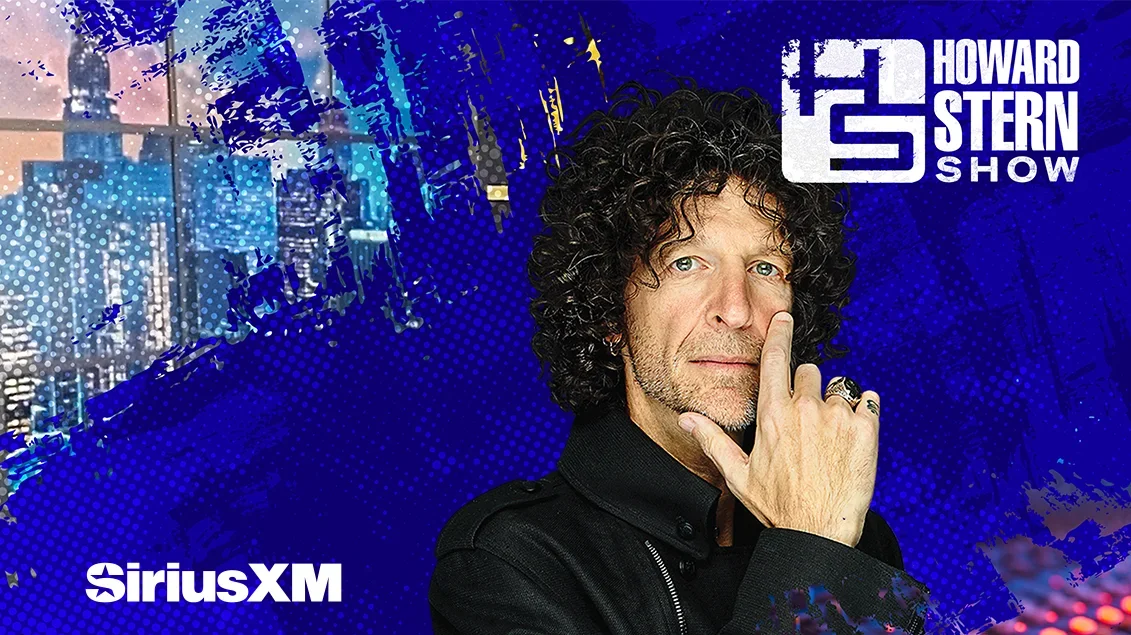
The show airs exclusively on SiriusXM, where it has lived since 2006, occupying two dedicated channels - Howard 100 and Howard 101. Howard 100 carries the live program, while Howard 101 hosts the Wrap-Up Show, celebrity specials, concert performances, and over 30 years of archival content. That two-channel setup is itself a statement: no other personality in satellite radio history has been given that kind of real estate, and no one else has filled it the way Stern has.
Where It All Started - From Local Radio to National Phenomenon
The Howard Stern Show did not arrive fully formed. It was built through years of pushing limits at stations that were not always sure they wanted him around. Stern's first significant platform came at WWDC in Washington DC, followed by WNBC in New York, where he was eventually fired for content that the station decided it could not defend. That firing turned out to be one of the best things that ever happened to him.
In 1985, Stern landed at WXRK in New York - known as K-Rock - and everything changed. The national syndication that followed, beginning in 1986, turned a New York radio personality into a coast-to-coast cultural force. By the peak of his terrestrial radio career, The Howard Stern Show was reaching an estimated 20 million listeners daily, with The Washington Post reporting averages around 12 million per day across his syndicated markets. Those numbers were not just impressive for talk radio - they were extraordinary by any format's standards.
The formula was deceptively simple: an uncensored host who said what everyone else was thinking but nobody else was saying, surrounded by a cast of memorable characters who created genuine chemistry over years of daily broadcasting. The show felt chaotic and spontaneous in ways that meticulously produced programs could not replicate, because much of it actually was spontaneous. That was the point. Howard demanded attention because you genuinely never knew what was going to happen next.
The Move to SiriusXM - a Gamble That Paid Off for Everyone
When Howard Stern announced he was leaving terrestrial radio for the subscription-based Sirius satellite service, the industry reaction was somewhere between skepticism and disbelief. The logic on paper seemed shaky: why would millions of listeners who got the show for free suddenly pay a monthly fee to keep listening? And why would Sirius - a company with roughly 600,000 subscribers at the time - stake so much of its future on one personality?
The answers became clear fast. Stern brought his audience with him in enormous numbers, and the move to satellite gave him something that terrestrial radio never could: complete freedom from FCC content restrictions. No more fines, no more battles with Standards and Practices departments, no more censors. The Howard Stern Show on SiriusXM could be exactly what it wanted to be, uncensored and unfiltered, and listeners who cared enough to subscribe were getting something they genuinely could not get anywhere else.
The financial terms reflected how seriously Sirius took the bet. Stern's first five-year contract with Sirius was worth $500 million, including production costs. The value to SiriusXM far exceeded that investment. The satellite radio company that had 600,000 subscribers before Stern signed eventually grew to 35 million subscribers - a growth trajectory that the company itself credits in significant part to the Stern relationship. His most recent contract renewal, announced in December 2025, extended the partnership for three more years, with Stern negotiating a more flexible schedule that allows him to balance broadcasting with personal time.
What Howard 100 and Howard 101 Actually Offer Listeners
Howard 100 is the home of the live Howard Stern Show, which airs on a Monday-Tuesday schedule running approximately three hours per episode. The programming feels nothing like traditional radio - it moves between long-form celebrity interviews, staff interactions, comedy bits, listener calls, and the kind of rambling, honest conversation that Howard has always excelled at. There is no rigid clock structure forcing segments to wrap up before the natural end of a conversation.
Howard 101 serves as the companion channel, carrying the Howard Stern Wrap-Up Show hosted by Gary Dell'Abate and Jon Hein, which airs after every live show and takes listener calls to dissect what just happened on Howard 100. Beyond the Wrap-Up Show, Howard 101 functions as a vault for the show's remarkable archive - over 30 years of content that represents a genuine document of American pop culture across multiple decades. The Sternthology segment on the Wrap-Up Show connects themes from the live show to archival clips daily, making the channel feel like a living museum of the show's history.

Robin Quivers - the Co-Host Who Made the Show What It Is
No honest account of The Howard Stern Show can go far without talking about Robin Quivers. She is not just Howard's co-host and news anchor - she is the counterpoint that makes the whole show work. Howard is provocative, sprawling, and relentless. Robin is composed, sharp, and possessed of a laugh that has become one of the most recognizable sounds in radio. The chemistry between them is the foundation that everything else on the show is built on, and it has been remarkably consistent across decades of daily broadcasting.
Quivers joined the show in 1981 and has been there ever since - through the WNBC years, the K-Rock years, the move to SiriusXM, and everything in between. Her background as a nurse and her own complicated personal history give her perspectives that consistently cut through to something real in the middle of what can be a deliberately silly show. When the conversation gets genuinely serious, Robin is often the one who says the thing that actually needed to be said. That balance - Howard pushing the envelope, Robin grounding the conversation - is more deliberate and more sophisticated than it sometimes appears.
Gary Dell'Abate - Bababooey and the Man Who Keeps It All Running
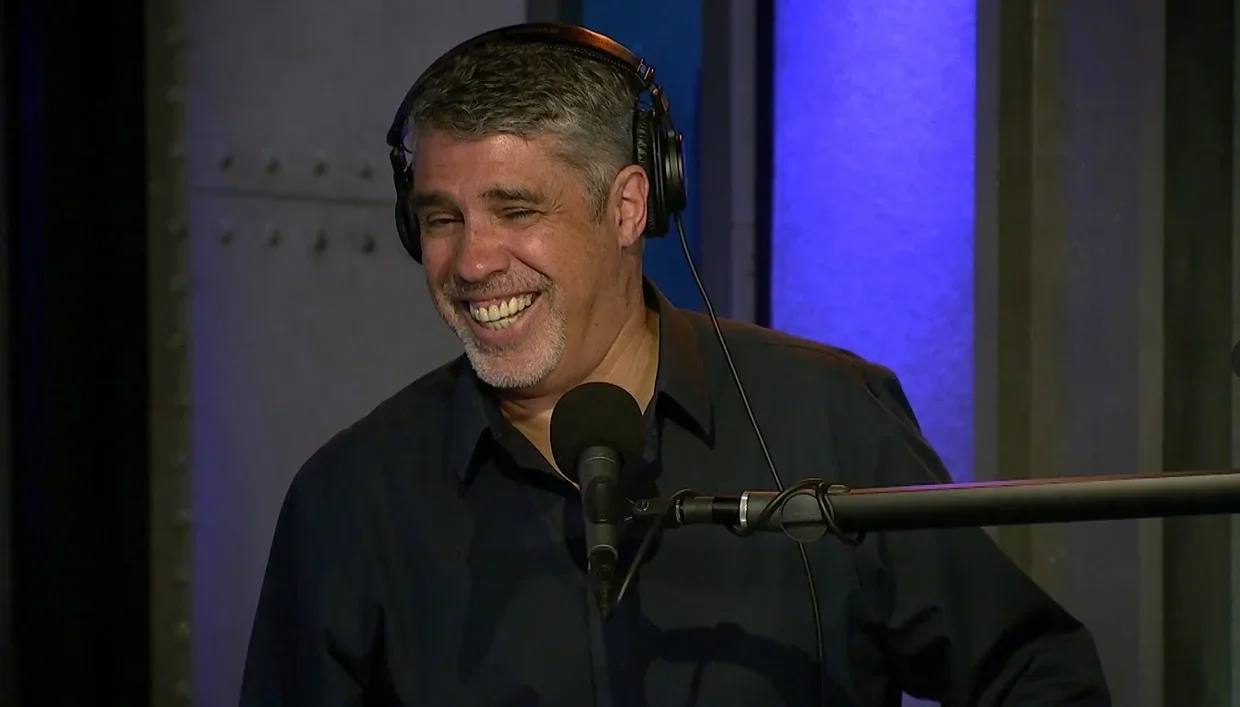
Gary Dell'Abate has been the executive producer of The Howard Stern Show since the early days, and his nickname - Bababooey, a name that became a pop culture meme before memes existed as a category - understates his actual importance to the operation. Dell'Abate books the guests, manages the staff, and serves as the institutional memory for a show that has been running for decades. He is also one of the show's most reliable comic targets, a role he inhabits with good humor that says something about the unusual internal culture of the program.
The fact that Dell'Abate, Quivers, and writer Fred Norris have all stayed with the show across decades of success and difficulty reflects something important about how the show actually functions. These are not interchangeable radio employees who came and went. They are a genuine ensemble that built something together over a very long time, and their collective history gives The Howard Stern Show a depth and texture that newer programs with higher turnover simply cannot match.
Howard Stern as Interviewer - the Evolution Nobody Expected
The Howard Stern that many people outside the radio world picture - the shock jock, the provocateur, the FCC's most expensive problem - is a real part of the history. But the version of Howard Stern that has defined the SiriusXM era is something different: one of the most skilled celebrity interviewers in American media. This evolution surprised a lot of people who had filed Howard away in a mental category and stopped paying attention.
What Stern does in a long-form celebrity interview is genuinely unusual. He prepares obsessively, reads everything available about his guests, and then uses that preparation not to conduct a by-the-numbers Q&A but to push conversations into territory that guests did not plan to discuss. The interviews go long - sometimes several hours - which creates space for the kind of candor that a four-minute morning show hit never could. Guests who came on expecting a quick appearance have walked out having said things they had never said publicly before, because Howard gave them enough time and enough genuine curiosity to get there.
The list of artists and cultural figures who have done their most revealing interviews on The Howard Stern Show is remarkable. Rock legends, film directors, comedians, actors, politicians - the show has become a destination for anyone who wants to be understood rather than simply promoted. That reputation took decades to build, and it is now one of the show's most valuable assets. In March 2026, SiriusXM announced that Howard's greatest celebrity interviews would be made available on YouTube - a recognition that this body of work deserves a wider audience than satellite subscribers alone.
Why Stern's Interviews Consistently Get Stars to Reveal More Than They Planned
The format is a big part of it. Three hours is a very long time to maintain a public persona. Most celebrities are practiced at managing 30-minute interviews, at deflecting certain questions, at keeping the conversation on the territory their publicist approved. Three hours with Howard Stern, who has done his homework and is genuinely curious and does not accept deflection gracefully, breaks down those defenses in ways that shorter formats cannot. By the second hour of a Stern interview, guests are often talking about things they had no intention of discussing when they sat down.
Howard also benefits from the fact that everyone knows who he is and what the show represents. There are no surprises about the environment. Guests who agree to come on The Howard Stern Show know they are walking into a place where real conversations happen, and that informed consent changes the dynamic from the start. They are not being ambushed. They are choosing to be honest, and Howard gives them space to do it.
The Schedule Change and What It Means for the Show
One of the most discussed topics among Stern Show fans in recent years has been the reduction in the live show schedule. The current format airs Monday and Tuesday, a significant reduction from the five-day-a-week schedule that characterized the terrestrial radio era. Howard negotiated this reduced schedule as part of his contract renewal, citing a desire for more flexibility and time away from the studio.
Fans who miss the old schedule have made their feelings known, loudly and often. But the argument on the other side is that the quality of individual show days has remained high, the archive on Howard 101 provides essentially unlimited content for subscribers who want more, and Howard's interest in the job - which has always been the engine of the show's energy - is better served by a schedule he actually wants to keep. A reluctant Howard Stern broadcasting five days a week would not be better than an engaged Howard Stern broadcasting two.
When he announced the most recent contract extension in December 2025, Howard told Robin Quivers live on air that he had found a way to have it all: more free time and continuing to be on the radio. The three-year extension on a flexible schedule suggests that both Howard and SiriusXM found a structure that works for both parties.
Key Facts About The Howard Stern Show
- The Howard Stern Show has been in continuous broadcast since the early 1970s, making it one of the longest-running programs in American radio history.
- At the peak of its terrestrial radio reach, the show attracted an estimated 20 million daily listeners, with Washington Post reporting averages around 12 million per day across syndicated markets.
- When Stern signed with Sirius in 2006, the satellite company had approximately 600,000 subscribers. SiriusXM has since grown to 35 million subscribers.
- The show occupies two dedicated SiriusXM channels - Howard 100 for the live program and Howard 101 for the Wrap-Up Show, specials, and over 30 years of archival content.
- Robin Quivers has served as co-host and news anchor since 1981, making her partnership with Howard one of the longest-running in radio broadcast history.
- In December 2025, Howard Stern signed a new three-year contract extension with SiriusXM, confirming the show's continuation on a more flexible schedule.
- Howard's greatest celebrity interviews were announced for YouTube release in March 2026, expanding the show's reach beyond the SiriusXM subscriber base for the first time at scale.
The Show's Cast and Crew Over the Years
| Name | Role | Era | Known For |
|---|---|---|---|
| Robin Quivers | Co-host, news anchor | 1981 - present | Iconic laugh, sharp counterpoint to Howard |
| Fred Norris | Writer, sound effects | 1981 - present | Quiet brilliance, sound design, comedy writing |
| Gary Dell'Abate | Executive producer | 1984 - present | "Bababooey," booking, running the operation |
| Jackie Martling | Comedian, writer | 1983 - 2001 | Jokes, laughter, the original "Jackie the Jokeman" |
| Artie Lange | Comedian, co-host | 2001 - 2009 | Cult favorite, improvised comedy, memorable feuds |
| John Melendez | Correspondent | 1988 - 2004 | "Stuttering John," celebrity ambush interviews |
What the Shock Jock Label Always Got Wrong About Howard Stern
The "shock jock" label followed Stern for most of his career, and it is not entirely wrong - the show did shocking things, intentionally, and Howard understood exactly what he was doing when he pushed against the FCC's boundaries. But the label became a way for people who did not listen to dismiss the show without engaging with what it actually was, which was something more complex and more interesting than a provocation delivery mechanism.
The show at its best was always a conversation about authenticity. Howard's fundamental position, across decades of broadcasting, was that people should say what they actually think rather than performing respectability for an audience. That position - applied to himself, his staff, his guests, and his listeners - created a broadcast environment that felt radically honest compared to the careful, managed tone of mainstream media. The shock was not the point. The honesty was the point, and the shock was a byproduct of how rarely American media was actually honest about anything.
That quality is why the celebrity interview format worked so naturally for the SiriusXM era. Howard's commitment to actual conversation rather than promotional performance translated directly into a new context, with a different kind of content but the same underlying value: say what is real, not what sounds acceptable. That is harder than it looks, and Howard Stern has been doing it, consistently and with genuine skill, for longer than most of his critics have been paying attention.
How to Listen to The Howard Stern Show Today
The Howard Stern Show is exclusive to SiriusXM. There is no free version, no ad-supported stream, and no terrestrial radio broadcast - the move to satellite in 2006 ended the show's presence on over-the-air radio permanently. To listen, you need a SiriusXM subscription that includes the Howard channels, which are available through the SiriusXM app on any smartphone, through satellite-equipped vehicles, and through compatible home devices.
For new listeners, Howard 101's archive is an extraordinary entry point. Decades of content organized and accessible through the SiriusXM app means that someone coming to the show for the first time can spend months exploring its history before catching up to the live broadcasts on Howard 100. The Sternthology segments on the Wrap-Up Show, which connect current show themes to archival clips, are a particularly good way to understand how the show's history layers together into something larger than any individual episode.
The show can also be reached at 1-833-STERN-SHOW for calls and texts, maintaining the direct listener connection that has been part of its identity since the terrestrial radio days. Whether you are a longtime fan or arriving for the first time, the Howard Stern universe on SiriusXM is deeper, stranger, and more rewarding than the "King of All Media" label might suggest to someone approaching it cold. That has always been the best-kept secret about The Howard Stern Show: it rewards attention more generously than almost anything else in radio.